 G EPOXY PRO
02 — Where the floor is
Commercial floors
A commercial floor is a scheduling problem as much as a coating problem. Auto service, restaurant and retail floors have to go down and cure inside the hours the business is closed. The system gets chosen for what it survives — hot tires, grease, carts — and for how fast it can be walked on.
What we mean by commercial
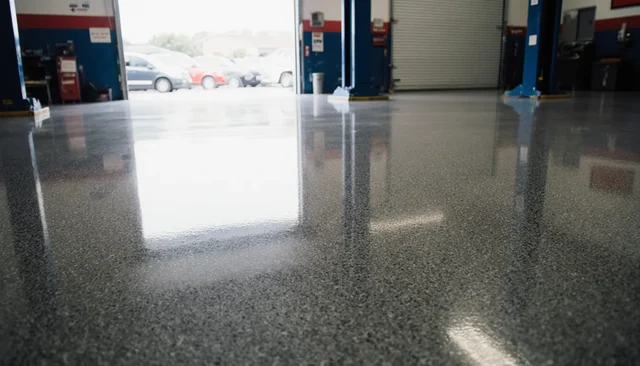
Auto service & repair
Hot tire pickup, oil, brake fluid, rolling jacks
Restaurant & kitchen
Grease, thermal cycling, sanitation, tight windows
Retail & showroom
Appearance-led, high foot traffic, cart wheels
Self-storage facility
Large footprint, low upkeep, unconditioned space
Office & light commercial
Appearance and acoustics, daytime occupancy
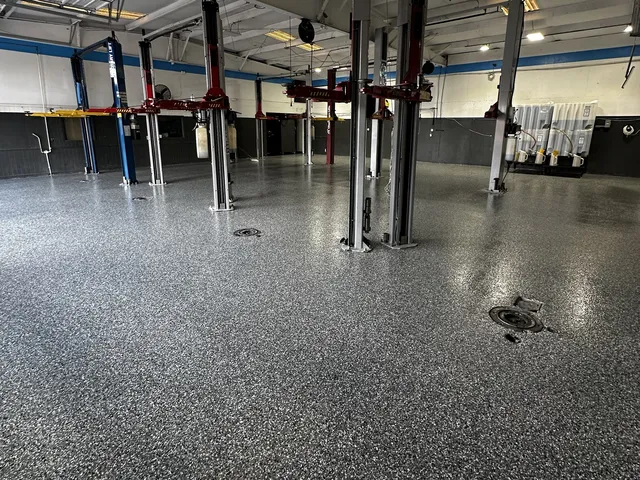
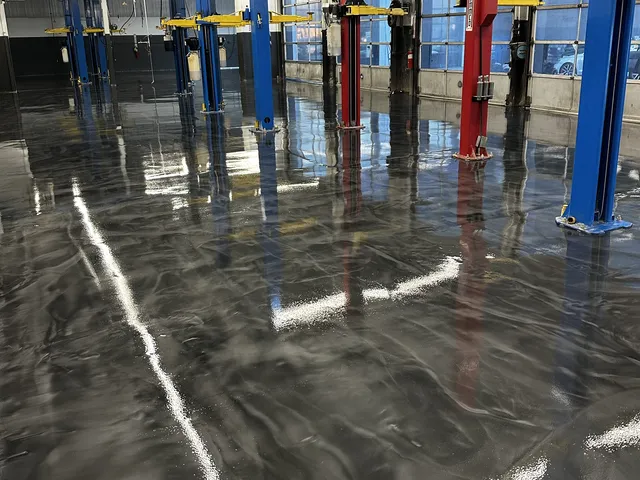
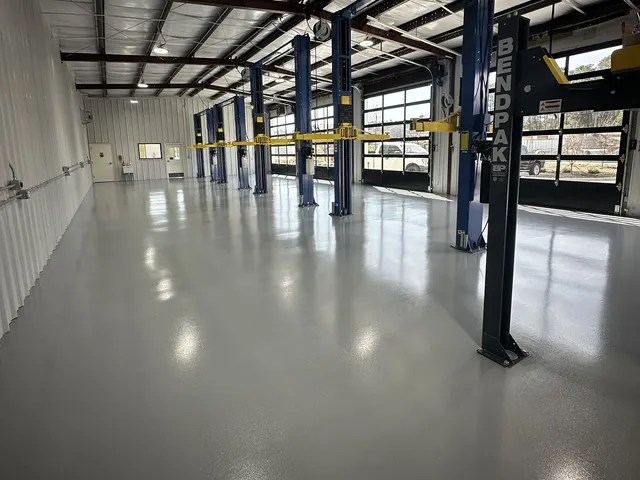
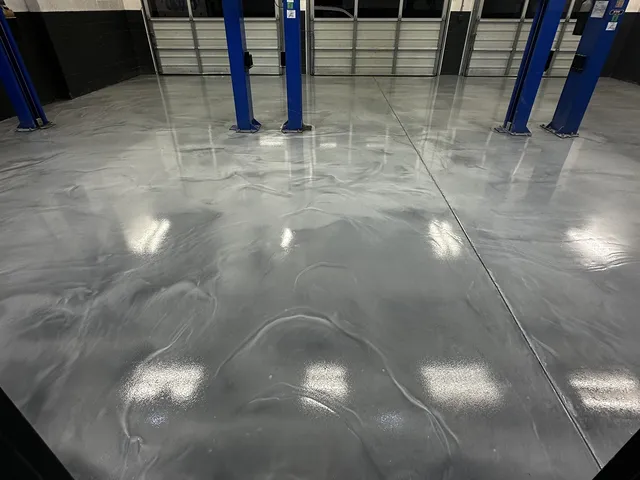
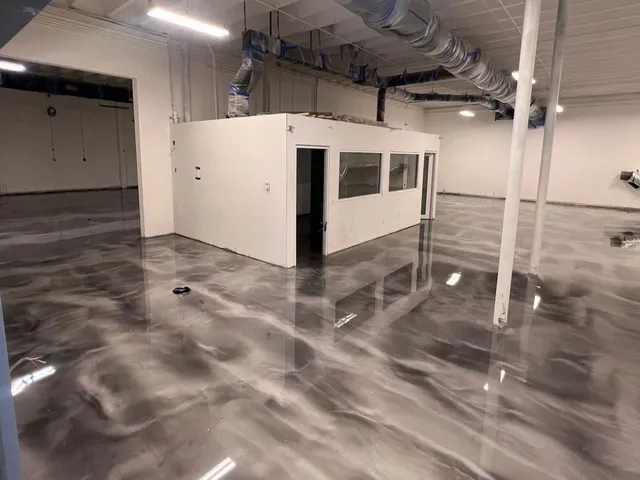
Commercial floors already down
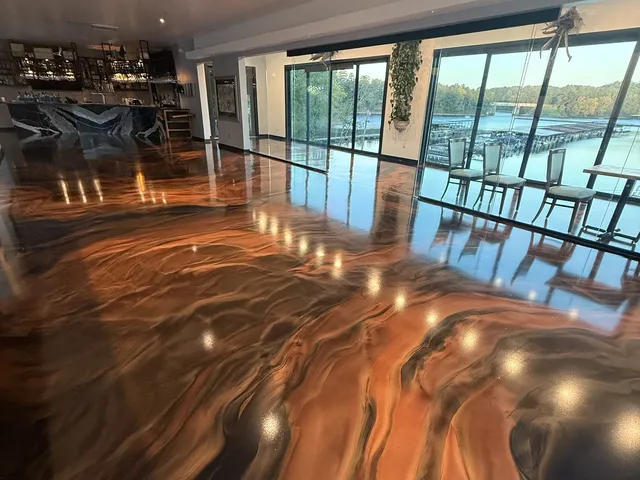
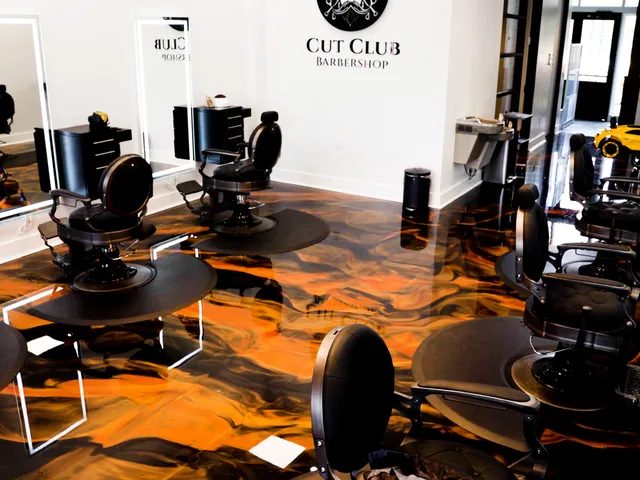
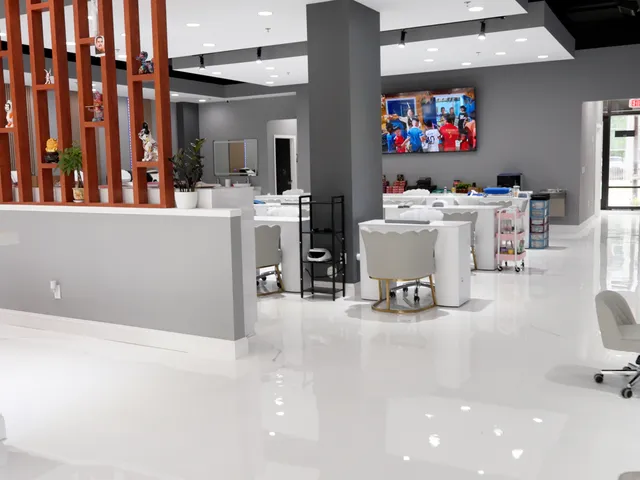
Recent floors of this kind.
Questions
What commercial buyers ask
Can you coat a restaurant floor without closing for a week?
Usually yes. Most restaurant floors can be turned over a Sunday-to-Tuesday window if the space is cleared and the schedule is set in advance. The constraint is cure time, not install time, so the product gets chosen around your reopening date rather than the other way around.
What is hot tire pickup and how do you prevent it?
Hot tires soften a weak coating and pull it off the slab when the car is moved. It happens when the floor was sealed with a consumer-grade product or coated without mechanical profiling. A properly ground and primed epoxy system with the right topcoat does not do it.
How long before we can drive on a new shop floor?
Foot traffic is typically 24 hours after the topcoat and vehicle traffic 72 hours, though it varies with the product and the temperature in the building. Cold slows cure down considerably. The schedule gets confirmed against the actual product before the job starts.
What warranty comes with a commercial floor?
One to two years on commercial work, depending on the system and the traffic it takes. The exact term is written into the quote. A floor that was prepared properly generally outlasts its warranty by a wide margin — the guarantee covers the installation, not the wear.
Does an epoxy floor meet health department requirements for a kitchen?
A seamless resinous floor with coved base is standard in commercial kitchens because there is no grout line for bacteria to sit in and the cove eliminates the floor-to-wall joint. Confirm the specific requirement with your local inspector before the system is specified.
Talk about a commercial floor
Answered within the hour. Jobs from 400 sq ft; most commercial work starts around 1,200 sq ft.